Tuesday, August 30, 2011

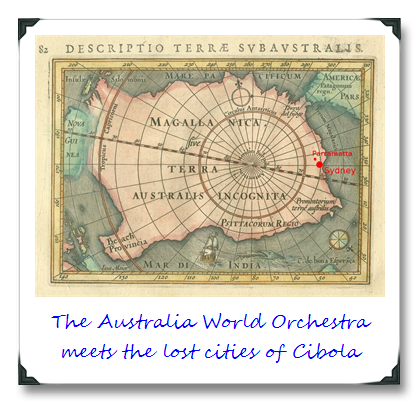
Terra Australis World Orchestra

You can sense the excitement over at the brand new “Australia World Orchestra” website:

One of the most exciting orchestral initiatives in Australia, the Australian World Orchestra’s (AWO) vision is simple: to bring together Australia’s finest classical musicians from around the world to form one of the country’s most electrifying orchestras.

I can hardly wait to see them, and there’s four concerts to choose from:

  • Sydney
  • Sydney
  • Sydney
  • Parramatta

Parramatta?  Why bother leaving the CBD at all?

Still, I guess it’s a big country, and a full orchestra can’t zip around like the ACO, so I’ll just have to content myself with the webcast.  The what-cast?  Chance would be a fine thing!

Tuesday, August 23, 2011

Cellists in mini skirts

Yuja Wang’s appearance at the Hollywood Bowl, to play Rachmaninov’s Piano Concerto No. 3 while simultaneously wearing this body hugging outfit and appropriate clubbing heels, has attracted more than its fair share of comment, a couple of which are worth repeating here.

First up, music critic Robert D. Thomas, writing in the Pasadena Star-News, explained that:

It also may (or may not) be worth mentioning that she came on stage last night wearing the shortest dress I’ve ever seen a female pianist wear, an orange sheath that elicited gasps from the audience.

I can only infer from this that Robert D. Thomas has in fact seen shorter skirts, but only on male pianists.  Is he prepared to name names?  What sort of town is Pasadena anyway?  Cue Monty Python…

Pasadena squire? Famous place! Nudge nudge, wink wink, say no more.

As for the other quotable quote, this came from her indoors, who when confronted with the Yuja Wang photo, simply asked “Is she a cellist?”

I wonder what Robert D. would have made of that!


Postscript to this piece – someone has injected some nice solid science into the debate – see Visual Cues Impact Judgment of Piano Performances.

Monday, August 15, 2011

The SSO and Local Talent

imageThe Sydney Symphony Orchestra is the first out of the blocks with their 2012 program.  While it’s encouraging to see that they have upped their Repertoire Safety Index, it’s still well below average at 5.3.  What’s more concerning is that their Australian composed content has fallen to a dismal 5%.

It’s nice see that our premier orchestra – funded as they are by the Feds to the tune of a lazy $10 million or so – have been able to ensure that works composed by Australians edge out those composed by Hungarians (3%), Brazilians and Argentinians (both 2%), but it pales a bit in comparison with the volume of works composed by Russians (16%), French (19%) and Germans (24%).

Here are the results…could try harder!

image

Sunday, July 31, 2011

AMPAG

The Australian Major Performing Arts Group has released its 10th survey of arts group funding and the finding are much as you’d expect:

image

No surprise, given the staff numbers involved, that the music related major performing groups underperform the overall average:

image

One thing which did strike me as unusual was the results for major arts groups based in Victoria:

image

As I discussed here, the Melbourne Symphony Orchestra had a significant jump in its grant related income to total income ratio, going from 52% in 2009 to 57% in 2010.  Given the size of the MSO grants ($13.7m in 2010) it’s hard to see how the average could be so low.  There must be a bunch of Victorian arts organisations operating on the proverbial shoe-string.

Wednesday, June 29, 2011

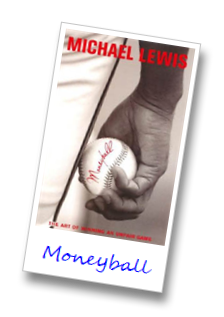
Moneyball–the musical

Greg Sandow started an interesting conversational thread when he raised – in an interview with The Australian (here), the prospect that orchestras composed of young musicians might make up for a lack of polish with extra pizzazz.  He’s expounded on this in various blogs (here, here and here) and elaborated on what he feels is a forgotten discipline, that of assessing the quality of an orchestra. 

He highlights four key issues:

        • technical excellence (balance, intonation, ensemble)
        • the strength of each section, and of each principal
        • how well the orchestra plays various musical styles
        • whether the orchestra plays with edge of the seat excitement, with melting passion, with visible and audible commitment

I thought it was interesting that Sandow has omitted to raise the issue of audience engagement. This in turn raises another interesting question…what is the point of an orchestra?  They have a number of important functions, from preserving our musical and cultural traditions, to educating us, to providing a vehicle for modern composers to show their stuff.  But when it’s all said and done, they are also here to entertain us , and there’s an objective that’s extremely easy to measure: ticket sales.

One of the problems of getting overly focussed on ticket sales and broad audience appeal is that its only a matter of time before you reach the point of skating rinks and light-classics-on-ice, the kind made famous by Voldemort.  However, surely audience numbers and audience engagement need to be factored into an audience assessment process.

Sandow uses plenty of baseball analogies in his pieces, and here’s another one.  Moneyball, a book by financial journalist and former Salomon Brothers trader Michael Lewis, is the story of a low-budget team (Oakland) building a winning record by buying cheap players who actually contribute to winning games (e.g. via a high on-base percentage) rather than expensive players who only appeared to be contributing to winning games (e.g. by home run production or stolen bases or golden glove defensive skills).  This was made possible by a very precise mathematical understanding of the things in baseball which are well correlated with winning, compared with things which appear to be important but aren’t in fact all that well correlated with winning.  So on this point perhaps Sandow is right – maybe we don’t really understand what makes a successful orchestra, and simply assume that artistic excellence, coupled with a few established international soloist, will do the trick.

Sunday, June 19, 2011

A Living Australian

The ASO ticked a couple of boxes this weekend by adding Carl Vine’s Microsymphony to a program including the Brahms Violin Concerto and Shostakovich Symphony No. 1. 

As I’ve noted here previously (also here), orchestras around the country don’t do enough to promote the work of a) living composers, and b) Australian composers, and Vine obviously satisfies both tests.  That said, the ASO doesn’t fare too badly on either score, with their 2011 program featuring 24% of pieces written by living composers, and 20% by Australian composers (contrast the Sydney SO – 8% and 6% respectively).

Microsymphony went over very well with the audience, as did the Shostakovich, but the star turn of the night was of course the Brahms Violin Concerto with Tasmin Little at the controls of her Stradivarius.  This was a tremendous performance, as you’d probably expect, but what I didn’t expect was that she’d take half an hour out prior to the start of the concert to give the pre-match address, along with violinist Lachlan Bramble.  I go along to these talks every chance I get, and have heard a range of

ASO musos, academics and teachers expounding on the music we’re about to hear, but I don’t think I can recall a single occasion when the soloist has taken part.  I’m sure they have a lot on their minds prior to a performance, and there’s an obvious language barrier in some cases, but surely more could follow this example and do a bit more to engage with their audiences.

In her talk Tasmin mentioned her Naked Violin project, which provides free downloads of a number of violin works (including Bach and Ysaye) along with some commentary.  It’s well worth a look.  This is her contribution to spreading classical music to the masses, using digital channels and not charging a cent for it.  As she said in her talk, she’s keen to prove that classical music doesn’t have to have such a narrow focus on people who are white, middle class and middle aged or older.  A bit ironic as her audience was entirely composed of that demographic, but you can understand what she’s driving at.
Saturday, April 30, 2011

2010 Annual Reporting Season

A bunch of 2010 Annual Reports have turned up on various orchestral websites.  Preliminary observations as follows:

  • Adelaide Symphony Orchestra
  • A reasonable pick up in ticket sales (8%) over 2009
  • Alas these gains dwarfed by a big loss of sponsorship/donation income (down over 30% on 2009) – this apparently relates largely to the cancellation (owing to weather) of one of their outdoor community events
  • Tight cost control ensured an operating surplus, with total income growing at 0.9% but total expenses at just 0.8%
  • Grant income as a % of total income edged up to 62% (from 60%)
  • Reserves to total expenses at 22%, compared with the target of 20%
  • Further (relatively small) losses on their portfolio of equities…more on this later
  • Queensland Symphony Orchestra
  • Massive drop in ticket revenue (25%) was just about offset by a big increase in sponsorships/donations, but it does beg the question as to why ticket sales fell so much
  • Overall income fell 1.2% but expenses rose 0.6%
  • Grant funding as a % of total funding rose to 77% (from 76%)
  • Like everyone else, a reserves to operating expense ratio of 20% is targeted, but QSO falls well short at 8% (up from 5% the previous year)
  • Sydney Symphony Orchestra
  • 227,758 people attended 119 performances across 77 programs
  • a small loss for the year, up from a big loss in ‘09
  • a big boost (14%) in their revenue from ticket sales
  • sponsorships and donations were down a bit (12% of total funding, down from 14%) – an ominous sign in Australia’s financial markets heartland
  • a solid increase in total revenues (8.5%) relative to cost increases (5.7%)
  • decreased reliance on grant funding – now just 37% of total funding (see the chart below)   
  • reserves relative to operating costs (23%) well above the 20% Australia Council floor
  • Tasmanian Symphony Orchestra
  • Ticket sales fell 11% on the year, while sponsorships and donations also saw a smallish (3%) decline
  • Overall income grew by 2% but expenses fell by 0.6%
  • Reliance on grant funding was up 1% to 76%
  • A healthy reserves position got even healthier – now 41% of operating expenses
  • West Australian Symphony Orchestra
  • Ticket sales up slightly (1%) but a big fall (10%) in sponsorships (what happened to the mining boom?) led to an overall decline in total income of 2.3%
  • A comparable (2%) cut in total expenses was engineered by slashing the marketing budget
  • Reliance on grant funding ticked up a little, but is still a relatively low 53%
  • Reserves remain (at 16%) under the target ratio of 20%

Sunday, April 10, 2011

ACO Funding – what’s the secret?

As this chart shows, the Australian Chamber Orchestra’s funding model leaves every other orchestra in this part of the world in the shade:

As a small orchestra their costs are obviously much lower than many others (for example, in 2009 ACO’s total expenses were half Melbourne’s and a third of the SSO’s), so their need for grants is somewhat lower, but the real story is their success in generating ticket sales (2009: almost as much as Melbourne, and almost half of Sydney’s sales) and sponsorships.  In regard to the latter, 2009 saw the ACO raise an impressive $4.6m, which was more than Sydney managed ($4.4m) and three times Melbourne’s effort ($1.4m – a fairly indifferent effort considering the range of big corporates headquartered there, along with plenty of well-to-do Melbourne families).

How does the ACO pull all this together?  A great orchestra, a powerful board and a charismatic artistic director all contribute no doubt.  As I’ve noted before, this also needs to be put in the context of a significantly more adventurous repertoire than the other orchestras hereabouts.

image The ACO also boasts a healthy proportion of work written by living composers, although one area where they aren’t quite up to scratch is the Australian composer component of their repertoire, which is slightly below the average:

image

Monday, March 28, 2011

Repertoire results are in (again)

I’ve had another crack at the Repertoire Safety Index, this time taking as much of the orchestras’ repertoire as possible into account, not just the flagship series.  The results haven’t changed too much – strong showings from the ACO, ASO and NZSO, with Melbourne and (especially) Sydney underperforming the average by a wide berth:

image

I’ve also taken the opportunity to update the “Live Music factor” (proportion of repertoire composed by people who are still alive) and a “Local Composers” score showing what proportion of repertoire was composed by Australians (or Kiwis in the case of the NZSO):

image

Given the amount of grant money these orchestras get each year, you might be excused for thinking that these numbers aren’t good enough.  Surely the Sydney Orchestra can manage to schedule Australian works at a rate slightly above 1 in 20. 

Does the Arts Council bring any pressure to bear in this area, when it comes time to allocating their grant monies?  One of their strategic objectives is:

  • Supporting the presentation of distinctive Australian cultural work, nationally and internationally

How does the overwhelming quantity of old European masterpieces help to meet this objective?

Monday, March 14, 2011

“Live” Music

Alex Ross makes an interesting observation in Listen to This about the decline in the amount of music in orchestral repertoire which was composed by people still alive at the time they were played. Here’s how the numbers stack up for our local orchestras:

image

A bit dispiriting to see our “flagship” orchestras trailing the pack on this indicator.